Do the mutual fund returns you yield always fall short in terms of meeting your expectations? That’s a common case with many investors because they unknowingly make certain mistakes. A significant percentage of mutual fund investors globally acknowledge that they remain dissatisfied with their mutual fund returns 10 years. If you’re on the same page, you must read this blog till the end to figure out the investment mistakes that have been affecting your mutual fund returns to date.
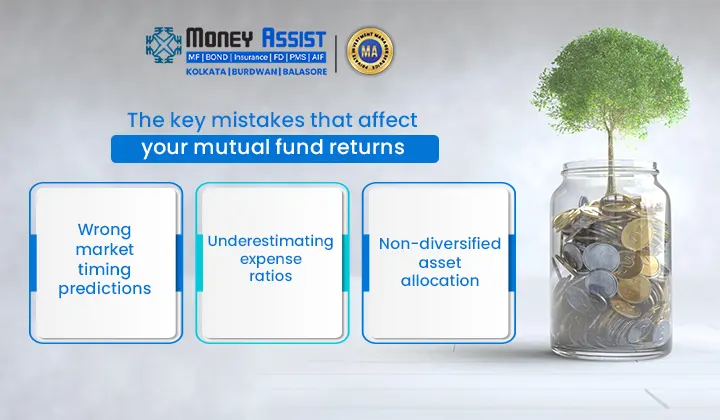
Many investors make desperate efforts to predict the market timing and enter the market during highs and lows to reap the best returns. However, this approach often backfires because predicting the market is not everyone’s cup of tea.
Even leading market experts can’t gauge market fluctuations accurately sometimes. You can’t always enter the market at the right time to earn massive returns. If you miss out on the market’s best-performing sessions by only a week or two, it can significantly affect your mutual fund returns 10 years. It specifically applies to lump sum investors because they are supposed to make their investments at the correct timings. So, it’s best to either go for SIPs or divide your investments in SIPs and lump sums.
Every mutual fund comes with a certain expense ratio that most investors ignore straight out. And, that’s the blunder, because these expense ratios translate to a massive deduction from your mutual fund returns 10 years. Suppose you select a fund with an expense ratio that is 1% higher than other funds. This 1% extra expense ratio translates to a large amount after 10 years or 20 years. So, the next time you compare funds before investing, take their expense ratios into consideration.
Another grave mistake that can dent your mutual fund returns 10 years is investing all your assets in a specific fund variant. When you invest all your assets in an equity fund, or a debt fund, or a hybrid fund, your returns don’t go too high.
On the contrary, your returns surpass your expectations when you allocate specific percentages of your total assets to different fund categories. The allocation must be done based on your age to align your returns with your requirements. Young investors should invest more in equity funds than debt funds or hybrid funds because they generally have higher risk appetites. On the other hand, senior investors should allocate the majority of their assets to debt funds to ensure steady post-retirement earnings.
These common mistakes are made by most investors, leading them to lower returns than they expected. Your returns will remain inadequate to match your expectations as long as you keep repeating these investment mistakes. Now that you’ve identified them after reading this blog, put your knowledge to work and invest wisely.