Financial stability generally starts with proper fund preparation. We at Money Assist help every individual create a strong emergency fund plan before you start investing in mutual funds. Having such funds protects you from facing financial uncertainties and reduces the chances of disruption during your long-term wealth creation aim. Therefore, the following blog will shed light on why emergency funds are essential before you start investing in mutual funds.
Emergency funds act as the perfect financial safety net because it keeps your protected from unexpected crises. They are the funds that you specifically save for unforeseen experiences such as hospital bills, home repairs, or job loss. These are a few situations that can strain your finances if you are not prepared for the future. So, without such a safety net, you are obliged to use only credit cards or high-interest loans, resulting in huge debt and financial stress.
If you are looking for proper advice, then Money Assist is the best option because we know the importance of emergency funds before you go for any heavy investment. You can consult our mutual fund agent to get proper assistance with your financial goals. First, we focused on securing your liquid funds for emergency purposes and later plan a long-term wealth creation.
Therefore, using such an approach keeps you protected during your investment journey. It also prevents you from selling your personal assets forcibly during the market downturn, giving you resilience and allowing you to grow your finances peacefully.
Investing in a mutual fund without having proper backup can lead to financial vulnerabilities. In such cases, Money Assist helps you understand why it is essential to keep an emergency fund in the back before stepping into the world of long-term investment. Here are a few risks to keep in mind:
Therefore, working with Money Assist is the best decision as they help you secure an emergency savings, leading to a huge financial foundation meeting your future goals.
Sudden market dips and personal emergencies might put a lot of strain on your mutual fund investment if you are unprepared for such uncertainties. At Money Assist, we help investors learn how to develop financial resilience, so that during a crisis, you won’t make hasty decisions.
So, having emergency funds indicates that you don’t have to redeem your mutual fund units midway during times such as a market slump, just to meet your daily expenses. Such a financial cushion ensures a proper wealth-creation journey even during short-term volatility. While you are working with Money Assist, you can easily take the help of our mutual fund agent to plan both investment strategies and emergency funds. They always provide the right advice about keeping a liquid fund fitting with long-term goals, ensuring that it doesn’t compromise your future ROIs.
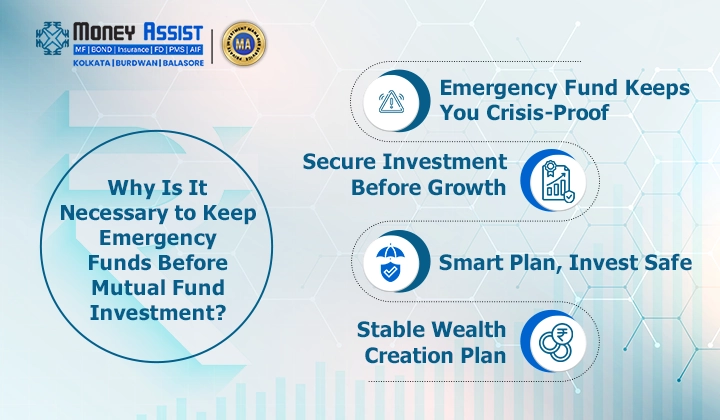
To sum up, keeping an emergency fund is very important before going for mutual fund investment because it keeps you protected from facing future uncertainties or market crises.